


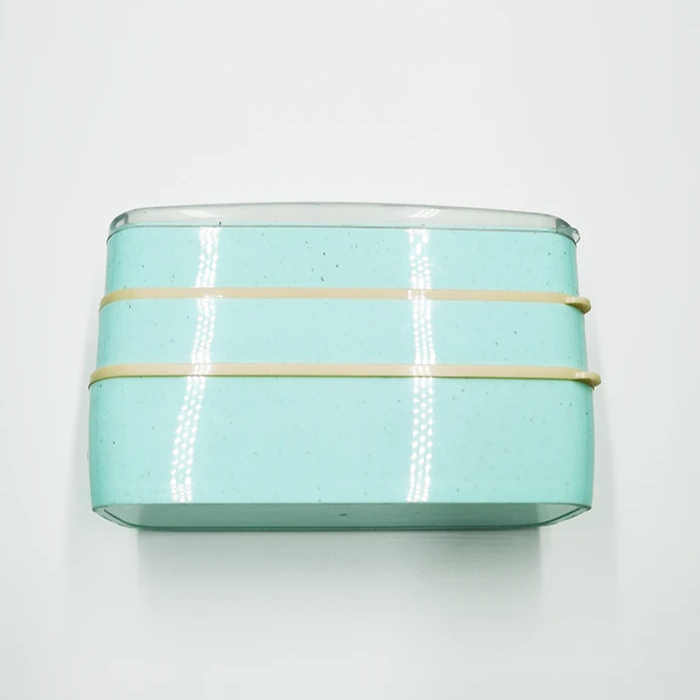
Custom Tableware Lunch Box Injection Mold Plastic Parts household product for Tupperware
For the injection molds of custom tableware lunch boxes, we adopt high-precision mold design and manufacturing technology, combined with advanced CAD software for 3D modeling and Moldflow simulation analysis to optimize mold structure, ensure dimensional accuracy and improve production efficiency. The mold materials are carefully selected from high-quality pre-hardened steel (such as P20, 718) and high-performance steel (H13) according to the product requirements, which have excellent wear resistance, corrosion resistance and high-temperature resistance, effectively extending the mold service life and ensuring stable mass production. The mold structure is reasonably designed with scientific cooling waterway layout, precise demolding slope (3°~5° for outer surface, 5°~7° for inner surface) and rounded corner design (R≥1mm), avoiding common defects such as part deformation, mold sticking and flash, while ensuring the smoothness and integrity of the plastic part surface.
The matching plastic parts for Tupperware lunch boxes are produced through strict injection molding processes, selecting food-grade, BPA-free thermoplastic materials that meet international safety standards (such as RoHS, FDA), mainly including polypropylene (PP), polyethylene (PE) and polycarbonate (PC) according to different usage needs. PP material is widely used for its excellent durability, heat resistance (0-130℃), microwave and dishwasher safety, as well as stain and odor resistance, making it suitable for daily use and food storage. PE material is soft and flexible, with good moisture resistance, suitable for auxiliary parts such as sealing gaskets, while PC material is transparent, impact-resistant and high-temperature resistant, ideal for clear lunch box bodies that allow easy observation of food contents. All materials are non-toxic, odorless and non-harmful, fully complying with Tupperware’s requirements for food contact safety and eco-friendliness.
Our custom plastic parts cover all components of Tupperware tableware lunch boxes, including lunch box bodies, compartment dividers, sealed lids, built-in spoons, forks and other matching accessories, which can be customized in terms of size, shape, color and function according to Tupperware’s specific product design requirements. The sealed lids are designed with humanized concave buttons and airtight structures to achieve airtight and moisture-proof effects, effectively preventing food leakage and串味, which is consistent with Tupperware’s core demand for food preservation. The lunch box bodies are designed with thickened walls and reinforcing ribs to enhance structural strength and impact resistance, while the bottom anti-slip edges ensure stable stacking and prevent adhesion to the desktop after heating. The surface of the plastic parts can be processed with matte or glossy finishes according to needs, with Ra≤0.2μm smooth surface to avoid scratches and easy cleaning.
Throughout the production process, we implement strict quality control systems, from raw material inspection (moisture content, purity testing) and mold precision calibration, to injection parameter optimization (temperature, pressure, time control) and finished product testing (dimensional inspection, airtightness testing, food contact safety testing). We strictly control the use of reclaimed materials (addition ratio ≤30%) and ensure thorough drying of materials (ABS: 80-90℃ for 2-4 hours; PC: 120-130℃ for 4-6 hours) to avoid defects such as bubbles and silver streaks in plastic parts. As a professional partner of Tupperware, we have rich experience in customizing injection molds and plastic parts for household lunch boxes, capable of quickly responding to Tupperware’s product update needs, providing one-stop solutions from mold design, sample trial to mass production, and helping Tupperware launch more practical, safe and high-quality household tableware lunch box products.
5.0
design customization
Please fill out the form below to request a quote or to request more information about us. Please be sure to upload customized requirement documents or pictures, and we will get back to you as soon as possible with a response. we're ready to start working on your new project, contact us now to get started.
Please fill out the form below to request a quote or to request more information about us. please be as detailed as possible in your message, and we will get back to you as soon as possible with a response. we're ready to start working on your new project, contact us now to get started.
Packing
Standard Carton Box
Mold Material
1.2738 P20 1.2343 1.2344 1.2083 1.2085 8407 1.2767
Certificate
ISO9001:2015
Product name
Kitchen appliances Plastic Parts Mold
Surface treatment
Customers' Detailed Request
Lead time
10-20 Days
Delivery Time
20-30 Days
Color
Customized Color
Length
Customized Length
Usage
Household products
Plastic Modling Type
Injection
Place of Origin
Guangdong, China
Processing Service
Moulding, Cutting
Product Data
|
No.
|
Item
|
Data
|
|
1
|
name
|
Tableware Lunch box customization tool injection molding manufacturing plastic products
|
|
2
|
color
|
white,black,green,nature,blue,yellow,etc
|
|
3
|
material
|
ABS,PMMA,PC,PP,PEEK,PU,PA,PA+GF,POM,PE,UPE,PTFE,etc
|
|
4
|
mould cavity
|
single cavity & multi cavity
|
|
5
|
runner system
|
hot runner and cold runner
|
|
6
|
equipment
|
CNC, EDM, cutting off machine,plastic machinery etc
|
|
7
|
mould material
|
1.2738 420H 1.2767 NAK80 1.2343 1.2344 1.2083 1.0285
|
|
8
|
injection machine
|
88T, 90T, 120T, 168T, 200T, 380T,420T,1200T
|
|
9
|
mould life
|
500000-5000000 shots as per customers' requirement
|
|
10
|
size
|
5-1000mm,or customized
|
|
11
|
tolerance
|
± 0.01mm
|
|
12
|
shape
|
as per your drawing or the sample
|
|
13
|
certification
|
ISO9001 and relate whole set professional test report
|
|
14
|
advantage
|
one stop procurement
|
|
15
|
Application field
|
Various plastic injection molded parts for various industrial and automotive applications
|
|
16
|
lead time
|
15-30 days for mould,plastic products according to quantity
|
|
17
|
other
|
24 hours instant and comfortable customer service
shipping status notification during delivery
regular notification of new styles & hot selling styles
|
Company Introduction
{{item.score}} Stars
{{item.pre}}%
{{item.nickname ? (item.nickname.slice(0, 2) + '*****') : item.source === 1 ? 'mall buyer' : '--'}}
{{item.comment_time}}
Review in the {{item.country}}
{{itemAttr.params_key}}: {{itemAttr.params_value}}
Contact Us
Get in touch with us
Just leave your email or phone number in the contact form so we can send you a free quote for our wide range of designs!
Related Products
Tel: +86 755 2301 2752
Mobile: +86 139 2281 5027 ( Wechat&WhatsApp)
Email: rfq@newcenturytooling.com
Shenzhen Factories
ADD: Building 6 ,MaAnShan Second Industrial Zone , NanHuan Road, ShaJing Town, Bao an District, ShenZhen, Guangdong, 518104 P.R.China
Shortcut links
Service
products
social media
vidoe
Info Center
Hong Kong Office
ADD:UNIT 1405B, 14/F, THE BELGIAN BANK BUILDING, NOS. 721 - 725 NATHAN ROAD, MONG KOK, KOWLOON, HONG KONG